

Looking for massage in Kigali that does more than relax you? Our therapeutic and sports massage targets tight muscles, aches and stiffness, and supports recovery from training and injury. It is a clinical treatment, not a spa service: we start by asking what the problem is, focus on the areas that need it and finish with simple stretches or exercises you can do at home.
Many people searching for a massage or spa in Kigali want relief from a stiff back after a week at a desk, or tired legs after a long run. That is exactly what we do. If you want a relaxing spa day with steam rooms and aromatherapy, a hotel spa will suit you better.
Who therapeutic massage helps
- Office workers with tight necks, shoulders and lower backs from long hours at a laptop in Kacyiru, Kimihurura or the city centre.
- Drivers and moto riders with stiff backs and shoulders from long hours on Kigali's hills.
- Runners, footballers, cyclists, basketball players and gym-goers who want to recover between sessions.
- People recovering from injury, as part of a physiotherapy plan.
- Anyone with persistent muscle tension, for example from stress, which NHS sources link with tight neck and shoulder muscles and tension headaches.
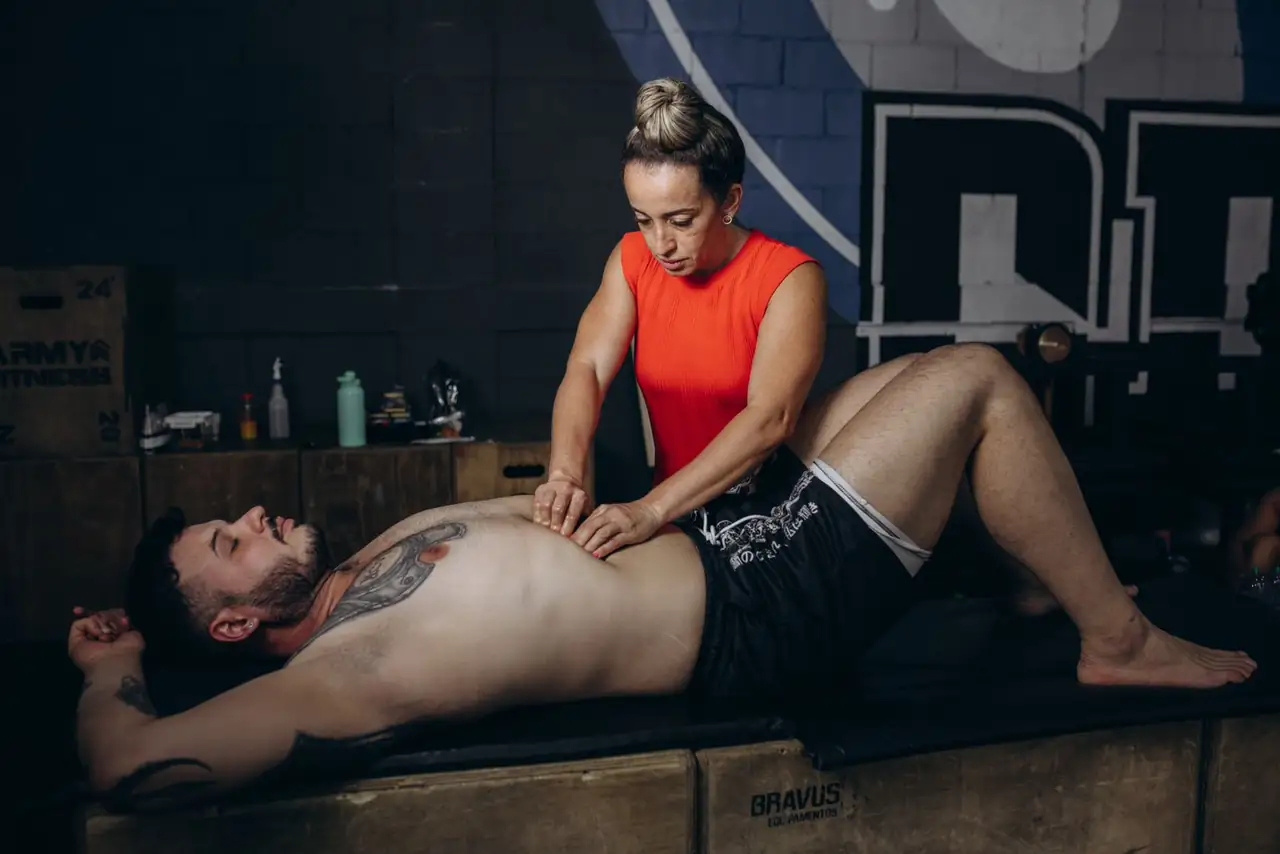
Types of massage we offer
| Type | What it is for | What it feels like |
|---|---|---|
| Therapeutic massage | Muscle tension, aches and stiffness in specific areas such as the neck, shoulders or lower back | Moderate pressure, focused on problem areas |
| Sports massage | Before or after training and events, recovery and flexibility | Brisk before events, deeper and slower after |
| Deep tissue massage | Long-standing tightness in deeper muscle layers | Firm, slow pressure; may leave you tender for a day |
| Massage within physiotherapy | Part of a treatment plan for pain or injury, combined with exercise | Short, targeted, alongside other treatment |
What happens in a massage session
- Health check. We ask where you feel tension or pain, what you do for work and sport, and about health conditions, medicines and recent injuries. This is how we make sure massage is safe for you.
- Quick movement check. We may look at how your neck, shoulders, back or hips move, so we know where to focus.
- Treatment. Your session concentrates on the problem areas rather than following a fixed routine. You stay covered with towels except for the area being worked on. Tell us at any time if the pressure is too much.
- Aftercare. We finish with two or three stretches or exercises and advice for the next day or two. Drink water, move gently and expect some tenderness after deep work.
If massage alone is not enough, or we find signs that need a closer look, we will suggest a physiotherapy assessment instead of booking more massage.
What the evidence says
We prefer to be honest about what massage can and cannot do.
- For low back pain, the UK's NICE guideline says manual therapy, including soft tissue techniques such as massage, should only be considered as part of a treatment package that includes exercise. Massage on its own is not the answer for recurring back pain.
- For post-exercise soreness, research is mixed. Some systematic reviews find massage reduces delayed onset muscle soreness and perceived fatigue after hard exercise; others find little effect. Many athletes still find it helps them feel ready to train again.
- For general muscle tension, people often report short-term relief and easier movement. Pairing massage with regular movement and better desk habits gives the best chance of the relief lasting.
When massage is not the right choice
Massage is safe for most people, but not always. Do not book a massage, and seek medical advice instead, if you have:
- a fever or feel unwell with an infection;
- calf pain, swelling, warmth or redness in one leg, which can be a sign of a blood clot (deep vein thrombosis);
- a fresh sprain, strain or bruise in the last couple of days (the NHS advises avoiding massage, heat and alcohol at first, as they can increase swelling);
- a suspected fracture, or pain after a serious accident;
- skin infections, open wounds or burns in the area.
Tell us before your session if you take blood-thinning medicines, are pregnant, have had recent surgery, have cancer, or have osteoporosis, diabetes or a heart condition. Massage may still be possible with changes, but sometimes we will ask you to check with your doctor first.
Massage vs physiotherapy: a quick guide
- Choose massage for general muscle tightness, desk-related stiffness or recovery after training, when there is no injury.
- Choose physiotherapy for new injuries, pain spreading into an arm or leg, tingling or numbness, pain that keeps coming back, or recovery after surgery. See back pain treatment and neck and shoulder pain.
- Athletes with a specific injury should start with sports injury physiotherapy and add sports massage as part of the plan.
Easy self-care between sessions
- Get up and move every hour if you sit at a desk.
- Try gentle shoulder rolls, 10 forwards and 10 backwards, a few times a day.
- Use a warm shower or heat pack for stiffness that has built up over time (not on a fresh injury).
- Build up training load gradually, especially before events such as long runs on Car Free Day.
Book a massage
Fill in the form below and choose "Therapeutic / sports massage". Tell us where you feel tension, any health conditions, and whether you prefer the clinic or a home visit. We will contact you to confirm a time. For a current price, contact us for a quote.
Frequently asked questions
What is the difference between therapeutic massage and a spa massage?
Therapeutic and sports massage focus on specific muscle problems, stiffness and recovery, and usually come with stretches or exercises to do at home. A spa massage is mainly for general relaxation in a spa setting. We do not offer spa treatments; our massage is clinical.
Does sports massage hurt?
Deep work can feel firm, and you may feel some tenderness for a day or two. It should never be unbearable. Tell your therapist about the pressure that feels right for you at any time during the session, and they will adjust.
Who should not have a massage?
Do not book massage if you have a fever, a suspected blood clot in a leg, or a fresh injury with swelling. People on blood-thinning medicines, with cancer, recent surgery or other medical conditions should check with their doctor first. Tell us about any health conditions when you book.
Is massage enough to fix back pain?
Massage can ease muscle tension and pain in the short term. UK NICE guidance says manual therapy such as massage should only be considered for low back pain as part of a package that includes exercise. For recurring pain, a physiotherapy assessment is the better starting point.
How often should I have a sports massage?
It depends on your training load and goals. Some people book after hard sessions or races, others every few weeks during a training block. Massage works best alongside sleep, hydration, sensible training progression and strength work.
What should I wear?
Wear or bring loose, comfortable clothing. You will only uncover the area being treated, and the rest of your body stays covered with a towel. You can ask for treatment through clothing for some areas, and you can stop the session at any time.
Should I get a massage right after spraining my ankle?
No. NHS advice is to avoid massage, heat and alcohol for the first couple of days after a sprain or strain, because they can increase swelling. Book a physiotherapy assessment instead, and massage can be added later in your recovery.