

Getting to a clinic is not always easy. Home physiotherapy in Kigali brings assessment and treatment to your door, so you can recover in familiar surroundings and practise exercises in the place you actually live. It suits older adults, people recovering from surgery or a stroke, and anyone for whom a trip across town in traffic is too tiring or painful.
Treatment at home has a practical advantage: we see your real environment. We can practise getting up from your own bed, using your own stairs and bathroom, and walking on the paths and slopes around your house, which are common in hilly neighbourhoods such as Kimihurura, Gisozi and Nyamirambo.
Who benefits from home visits
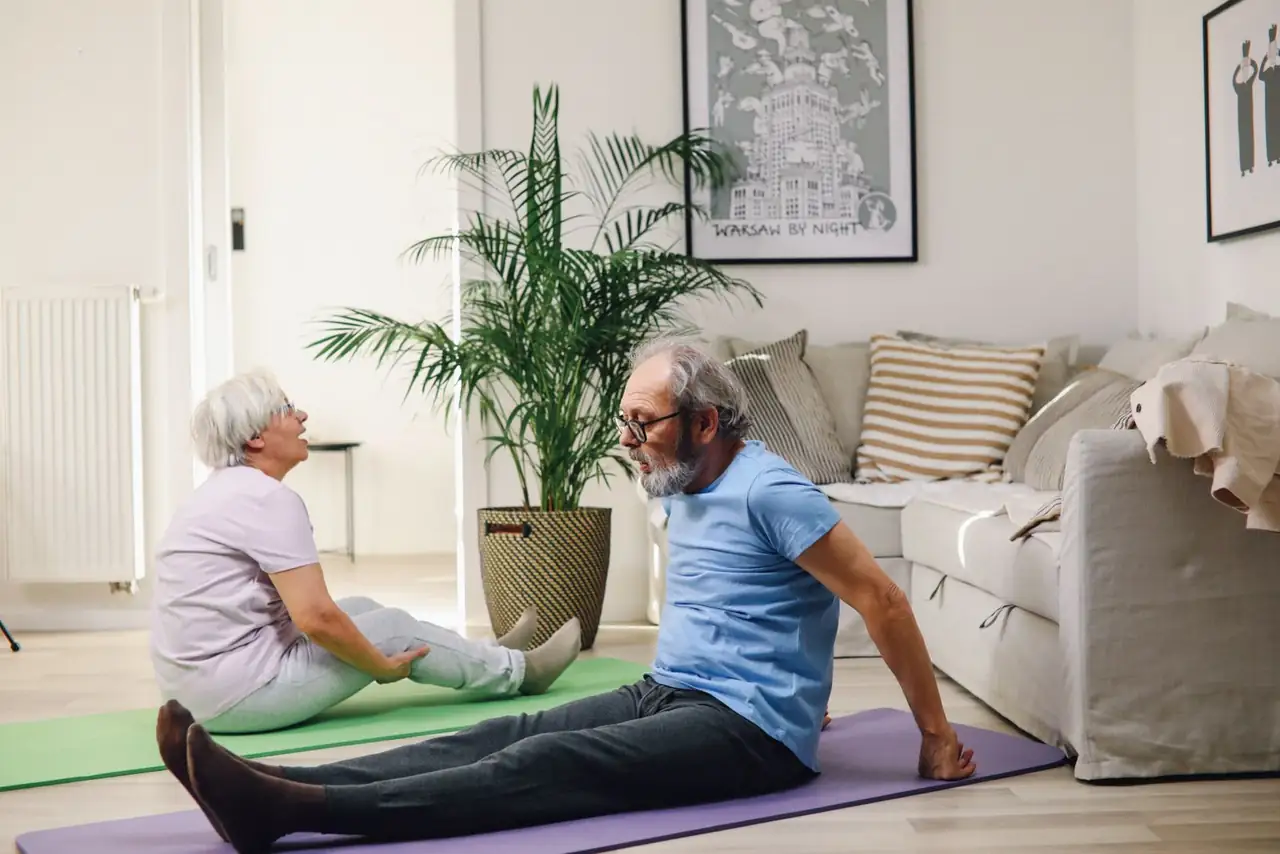
- Older adults who want to improve strength and balance and reduce the risk of falls.
- People recovering from surgery, such as hip or knee replacements, spinal surgery or fracture repair.
- Stroke survivors working on movement and independence. See stroke rehabilitation.
- People with long-term conditions affecting mobility, such as Parkinson's disease, multiple sclerosis or severe arthritis.
- People with severe back pain who struggle to sit in a car. See back pain treatment.
- Busy parents and professionals who prefer treatment at home or at the office.
What a home visit includes
- Assessment of movement, strength, balance and how you manage daily tasks: getting in and out of bed and chairs, walking, using the toilet and shower, and stairs.
- Treatment with hands-on therapy and exercises adapted to the space you have. We use a sturdy chair, the kitchen counter or a wall for support.
- Home safety check of the rooms you use most, with practical suggestions.
- Walking aid advice: whether a stick, crutches or a frame would help, and how to use it safely, including on stairs.
- A simple exercise plan written down for you and your family, with how often to do each exercise.
We always plan with your doctor's advice in mind. Please share hospital discharge notes, surgeon's instructions and a list of medicines.
Falls prevention for older adults
NHS figures suggest around a third of people aged 65 and over fall at least once a year. Strength and balance exercise programmes are one of the most effective ways to reduce falls, and the NHS notes that such programmes work best when tailored to the person and supervised by a trained professional. The WHO recommends that adults aged 65 and over do activities that combine balance, coordination and muscle strengthening on at least three days a week.
Typical exercises we may use, once it is safe for you, include:
- Sit to stand from a sturdy chair, using your hands at first if needed.
- Heel raises while holding the kitchen counter.
- Standing with one foot in front of the other, holding on, to train balance.
- Marching on the spot with support.
These are general examples. Older adults should be assessed before starting a new exercise programme, especially if they have had falls or dizziness.
Home safety checklist
Based on NHS falls prevention advice, check your home for:
- [ ] Clutter, trailing wires and loose rugs or mats on walkways.
- [ ] Good lighting in rooms, corridors and stairs, including a light you can reach from bed.
- [ ] Non-slip mats in the shower and bathroom.
- [ ] Spills mopped up straight away, especially on tiled floors.
- [ ] Frequently used items stored between waist and shoulder height, to avoid climbing and bending.
- [ ] Well-fitting shoes or slippers with a back, rather than walking in socks.
- [ ] Rails or a firm hand-hold by steps, the toilet and the shower where possible.
Recovery after hip or knee surgery
NHS hip replacement guidance gives a useful picture of recovery. Many people walk within 6 to 24 hours of the operation using a frame, then progress to crutches or sticks for around four to six weeks. Many walk independently within three months, and full recovery of strength and stamina can take up to a year. Home physiotherapy supports each stage: practising exercises your surgical team gave you, progressing walking, building leg strength and balance, and safely returning to stairs, the car and daily tasks.
How to prepare for the first visit
- Have hospital discharge notes, scan reports and a list of medicines ready.
- Wear loose, comfortable clothes and supportive shoes.
- Clear a small space in the room where you spend most time, with a sturdy chair that has no wheels.
- Ask the family member or carer who helps most to be present.
- Write down two or three things you most want to be able to do again, such as walking to the gate or showering on your own.
Areas covered
We arrange home visits across Kigali, including Nyarutarama, Kacyiru, Kimihurura, Remera, Kicukiro, Kibagabaga, Kimironko, Gisozi, Kanombe and Nyamirambo. Visits are grouped by area to keep travel time reasonable. When you book, give your neighbourhood and a nearby landmark, such as a school, church, petrol station or market, so we can find you easily.
Cost and insurance
Home visits cost more than clinic sessions because of travel time. Contact us for a current quote. Some insurers cover home physiotherapy and others do not, so check your policy, and ask whether you need a doctor's referral. Physiotherapists in Rwanda are licensed by the Rwanda Allied Health Professions Council, and you can ask your physiotherapist for their licence number.
Book a home visit
Fill in the form below and choose "Home visit". Tell us who the visit is for, their main difficulty, your neighbourhood and your preferred time. Not sure if home or clinic is better? Read about physiotherapy in Kigali or therapeutic massage, or just ask in the form.
Frequently asked questions
Who is home physiotherapy for?
Older adults, people recovering from surgery such as a hip or knee replacement, stroke survivors, people with long-term conditions affecting mobility, and busy parents or professionals who prefer treatment at home or the office. If travelling to a clinic is difficult or tiring, a home visit may suit you.
What equipment do I need at home?
Usually none. The physiotherapist brings what is needed or uses everyday items such as a sturdy chair, a table, stairs or a wall for exercises. Clear a little floor space and make sure the room has good light.
Can a family member attend?
Yes, and we encourage it. Family members and carers can learn how to help safely with exercises, walking and transfers between visits, which makes a real difference, especially after a stroke or major surgery.
Which areas of Kigali do you cover?
We arrange home visits across Kigali, including Nyarutarama, Kacyiru, Kimihurura, Remera, Kicukiro, Kibagabaga, Kimironko, Gisozi, Kanombe and Nyamirambo. Tell us your area and nearest landmark in the booking form, and we will confirm availability.
Does insurance cover home visits?
It depends on your insurer. Some policies cover home physiotherapy, others only cover clinic sessions or need a doctor's referral. RSSB refunds care at facilities with an RSSB agreement. Check your policy before booking, and contact us for a current quote for self-pay visits.
Is home physiotherapy as effective as clinic sessions?
For many people, yes. Exercises practised in your real home, on your own stairs and in your own bathroom, often transfer well to daily life. Some conditions need clinic equipment, and we will tell you if a clinic visit would be better.
How soon after surgery can home physiotherapy start?
Usually soon after you leave hospital, following your surgeon's instructions. NHS hip replacement guidance, for example, has people walking within a day with a frame, then using crutches or sticks for about four to six weeks. Share your discharge notes when you book.